Book review: King, Warrior, Magician, Lover
King, Warrior, Magician, Lover describes four evocative masculine capacities that one might want to cultivate:
- King
- Warrior
- Magician
- Lover
You are already capable of embodying the King, the Warrior, the Magician, and the Lover. Each of these is a capacity you already have to some extent, whatever your gender. But, they provide a map of capacities you may — upon learning more about them and reflecting on them in your life — wish to develop further.
(The book calls these archetypes, but I'm going to keep using the word capacity because I think it's clearer.)
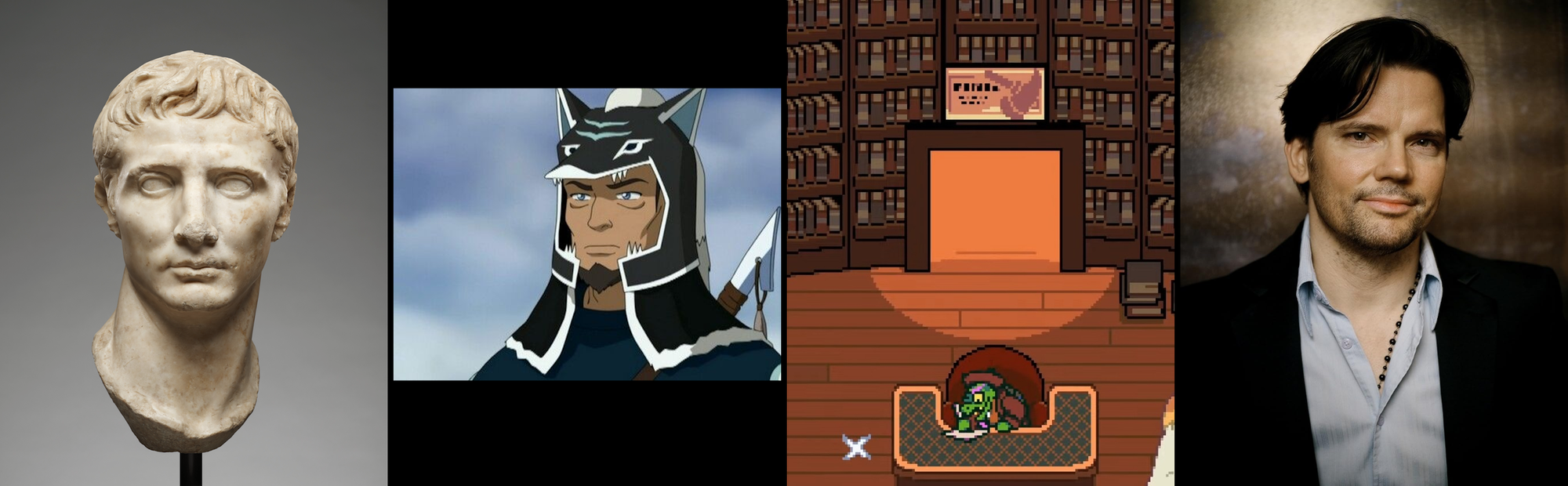
Stories, myths, art, and music can usefully evoke and communicate the texture of these capacities. You can get a sense from stories, myths, art, and music of what it is like to embody each capacity. In all these kinds of artistic depictions, the capacity is expressed by someone using that capacity, i.e. someone acting as King.
It's important to distinguish acting-as-King from being-King — the King archetype is a capacity, a potential way of being. A capacity is not something you can permanently embody or identify with. They are capacities, not solid, permanent, separable, continuous, or defined qualities you can achieve. Aragorn is not embodying King energy on the toilet, no matter how much material he may be "generating." That doesn't mean he's failing to embody King energy; said capacity simply isn't useful in a bathroom context.
These capacities are not entirely distinct. A good King is also a good Warrior. In fact, these capacities are convergent: A good Warrior is often a good Magician, and so on.
They are also not the same. Each capacity has its own unique texture. Caesar is not Hakoda is not Gerson Boom is not Zan Perrion.
They also aren't exactly singular capacities. They're more like evocative mnemonics for capacities that may be useful together. For example, uncommon knowledge is useful for channeling power and providing ritual initiation.
For each capacity, there are distorted patterns of behavior defined by identifying or disidentifying with the capacity. Identifying with a capacity leads to patterns defined by deploying it where it is not appropriate, perhaps to "prove" one "is" the capacity (that I "am" King, not merely acting as King), and by rejecting or ignoring evidence to the contrary. Disidentifying leads to the opposite patterns, failing to deploy a capacity where it is relevant and rejecting or ignoring evidence that, for example, one could act as King or that one has in fact done so.
(The book calls these distorted patterns, collectively, the "shadow," and divides them into the positive shadow (identifying with the capacity) and negative shadow (disidentifying). But I won't use those terms here.)
The book describes these four capacities and their associated distorted patterns of behavior in detail, with many examples showing what the capacities entail and what the distorted patterns are like. It covers how they develop from capacities experienced in childhood. It describes how they fit together and support each other. It also describes four and a half ways of intentionally developing these capacities.
It's a good and useful description. I'm disappointed to report this. I would like to be able to say, "It's overhyped and it sucks." I complain about its (blessedly brief and veiled) allusions to Quantum Bullshit that Proves Everything Is One. But overall, it's a good book and a good map of personal possibility. It's a nice framework for thinking about self-possibilities I find inspiring.